
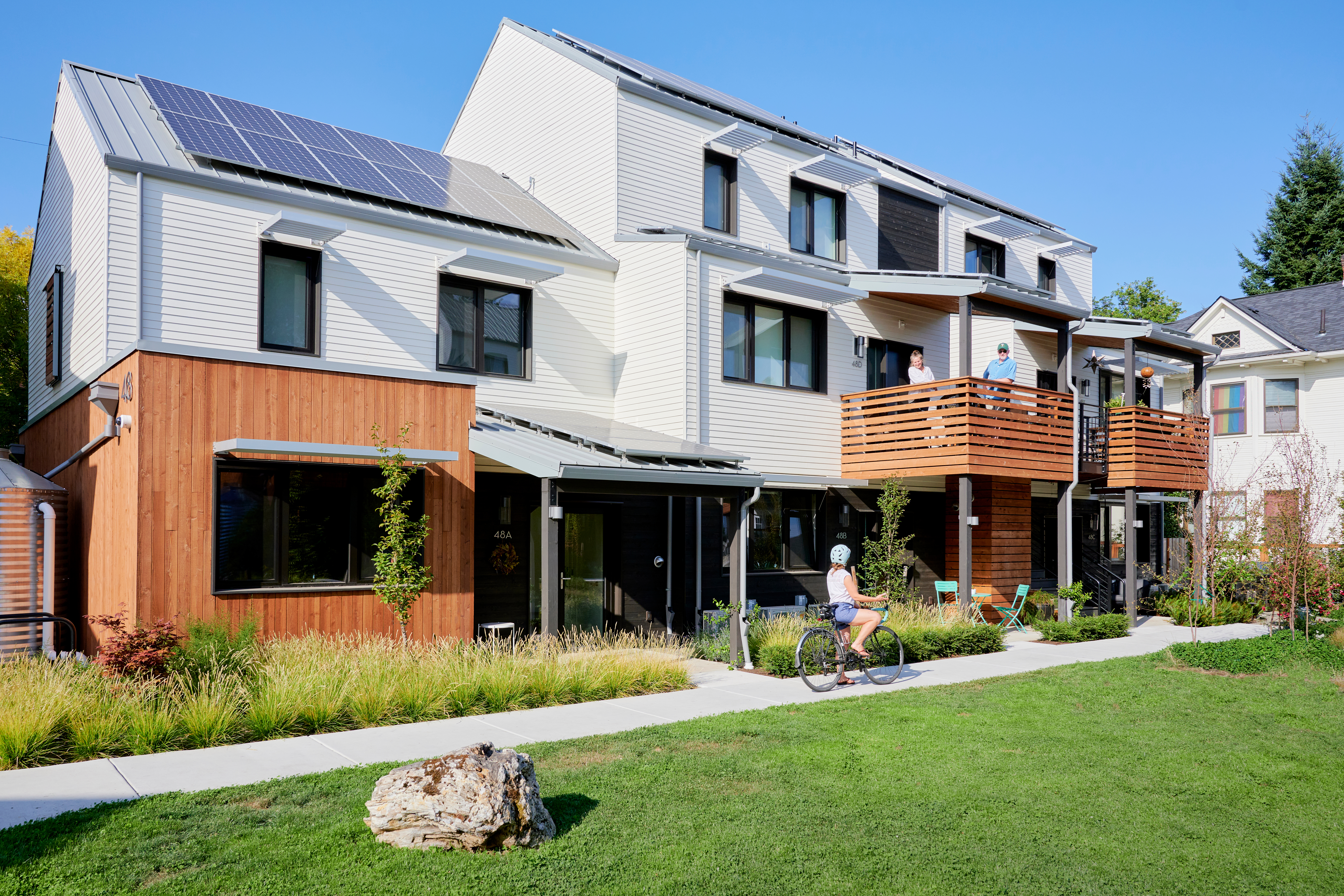
Can a building produce as much energy as it uses?
The answer is yes. Buildings designed to achieve this balance are called zero energy buildings (sometimes referred to as net zero energy buildings). They represent one of the most effective strategies for reducing energy use, lowering operating costs and creating healthier indoor environments. And because they reduce fossil fuel consumption and resulting greenhouse gas emissions, zero energy buildings are an increasingly popular way to combat climate change.
The Basic Definition
A zero energy building is a building that produces as much energy as it consumes over the course of a year.
In practice, this means:
- The building is designed to use very little energy through efficiency and high-performance design.
- The remaining energy demand is met by renewable energy, typically solar panels.
- Over a year, the energy produced equals the energy used.
Even though the building may draw power from the grid at times (such as at night or during the winter), it produces enough renewable energy during other periods to balance that use.
Efficiency Comes First
A common misconception is that builders simply add solar panels to make a building zero energy. In reality, efficiency comes first.
Design strategies often include:
- Highly insulated walls, roofs and floors
- High-performance windows and airtight construction
- Energy-efficient heating, cooling and water heating systems
- Mechanical systems that are right-sized and as energy-efficient as possible
- Heat recovery ventilation for fresh air and energy savings
- Energy-efficient appliances and lighting
By dramatically reducing energy demand first, renewable energy systems can be much smaller and fit onto the building’s roof.
Renewable Energy Delivers Power
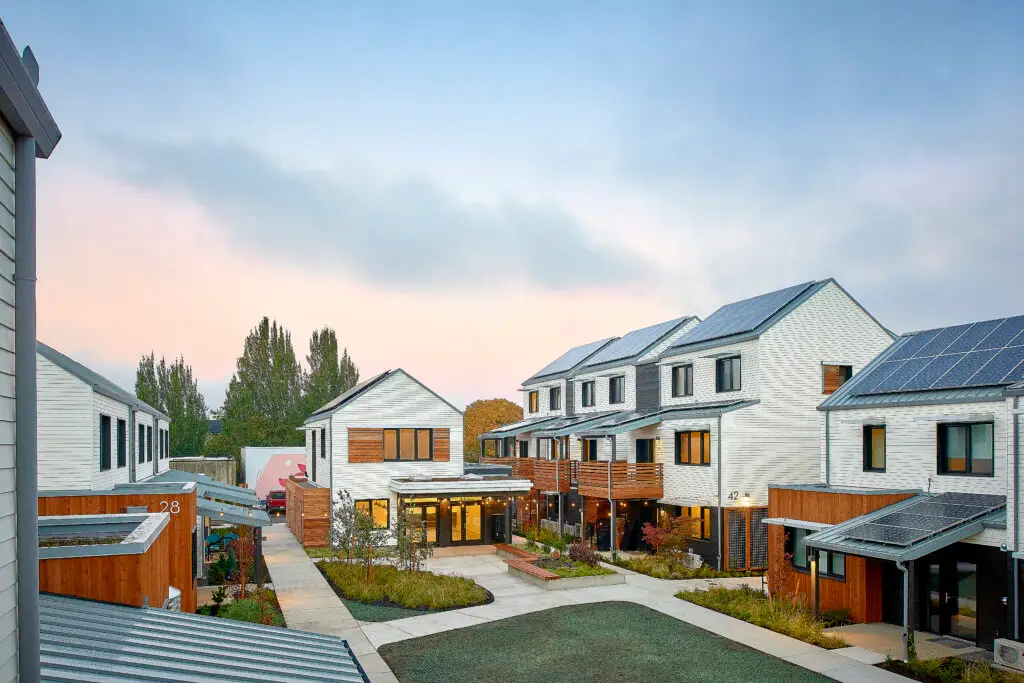
Once energy demand is minimized, renewable energy systems provide the remaining power needed to achieve zero energy. The most common source is rooftop solar photovoltaic (PV) systems.
Most zero energy buildings are still connected to the power grid. This allows them to draw electricity when their solar panels are not producing enough power and send clean energy back to the grid when they generate more than they need.
Increasingly, zero energy homes are also equipped with battery storage, allowing them to store renewable energy for use later. These buildings can serve as neighborhood resiliency hubs during prolonged power outages.
Zero Energy Also Works for Retrofits
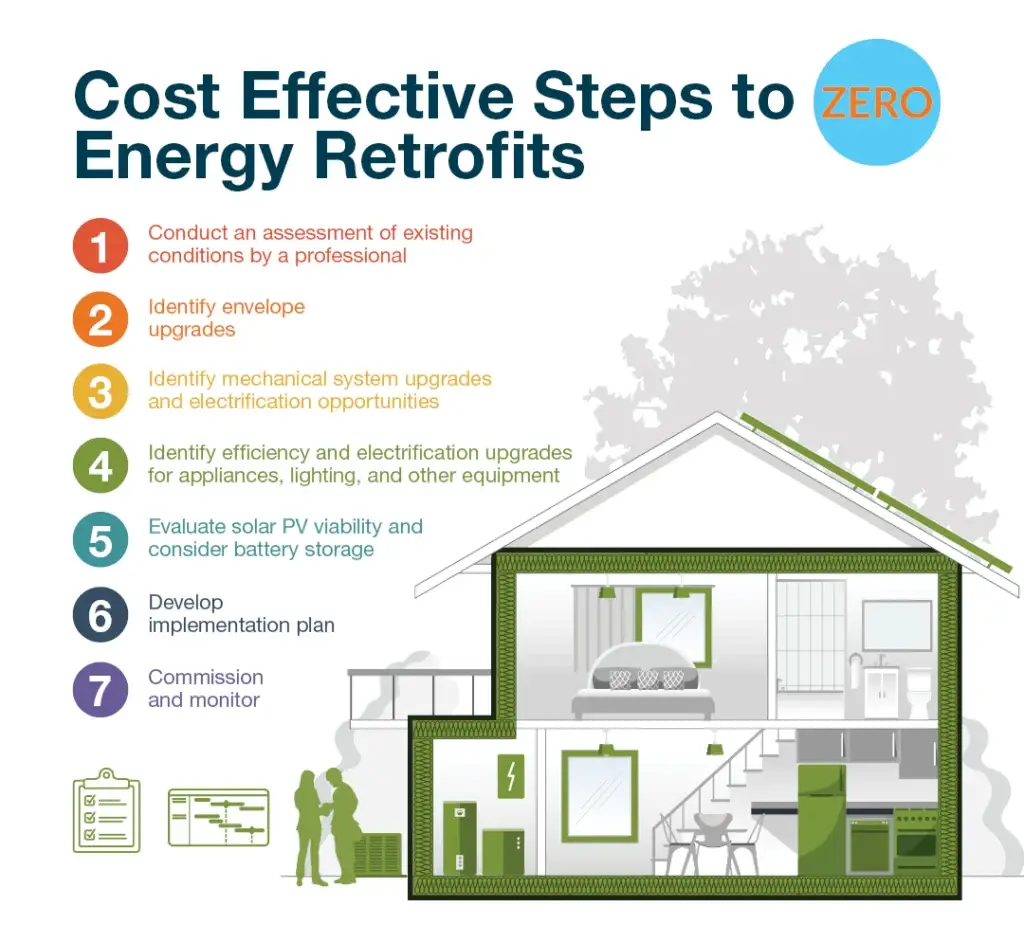
While designing a zero energy building from the ground up can be simpler, it is also possible to achieve zero energy through a comprehensive renovation of an existing building. With thoughtful design and strategic upgrades, many existing buildings can be transformed into efficient, comfortable spaces that produce as much energy as they use.
Just like with new construction, the first step is dramatically reducing energy demand through measures such as adding insulation to walls, roofs and foundations, upgrading windows and doors, and improving airtightness.
Building electrification is often part of the process. Many older buildings rely on fossil fuels for heating, hot water or cooking. Zero energy renovations often include electrification strategies such as:
- Heat pumps for space heating and cooling
- Heat pump water heaters
- Induction cooktops
- Electric or condensing clothes dryers
This allows the building to run on clean electricity when paired with solar power. Zero energy renovations typically include better ventilation and healthier materials, which can significantly improve indoor air quality.
A Growing Movement
Zero energy buildings are no longer experimental. Across North America and around the world, thousands of homes, schools, offices and community buildings are now designed to achieve net-zero performance. Zero energy performance has become part of green building certifications such as Passive House, Earth Advantage Zero Energy, Living Future Zero Energy, and the Living Building Challenge.
As building technologies improve and renewable energy becomes more affordable, zero energy buildings are increasingly becoming the new benchmark for high-performance design. And, thanks to better ventilation, superior indoor air quality and improved thermal comfort, these buildings create healthier places to live, work and learn.