
Designing and constructing buildings is a ton of fun, but it can also generate a ton of waste, pollution, carbon emissions and toxins if we aren’t mindful of our material choices. The good news is that every choice presents an opportunity to reduce waste, prevent pollution, combat climate change, create healthier indoor environments and support local communities.
Choosing healthier, more sustainable building materials, however, can be challenging. With so many factors to consider and so many claims to evaluate, it can be difficult to know what to prioritize and trust.
That’s why we take a holistic approach to assessing building materials. We start by vetting products against five healthy material criteria, prioritizing products with third-party certifications that provide credible evidence of how they support.
These criteria align with the AIA’s Architecture & Design Material Pledge, developed in conjunction with the Portland Materials Transparency Collaborative (PMTC). By signing the pledge, design firms like ours commit to making more intentional, informed material choices that support human health, climate health, ecosystem health, social health and equity, and a circular economy.
Our approach to choosing healthier materials
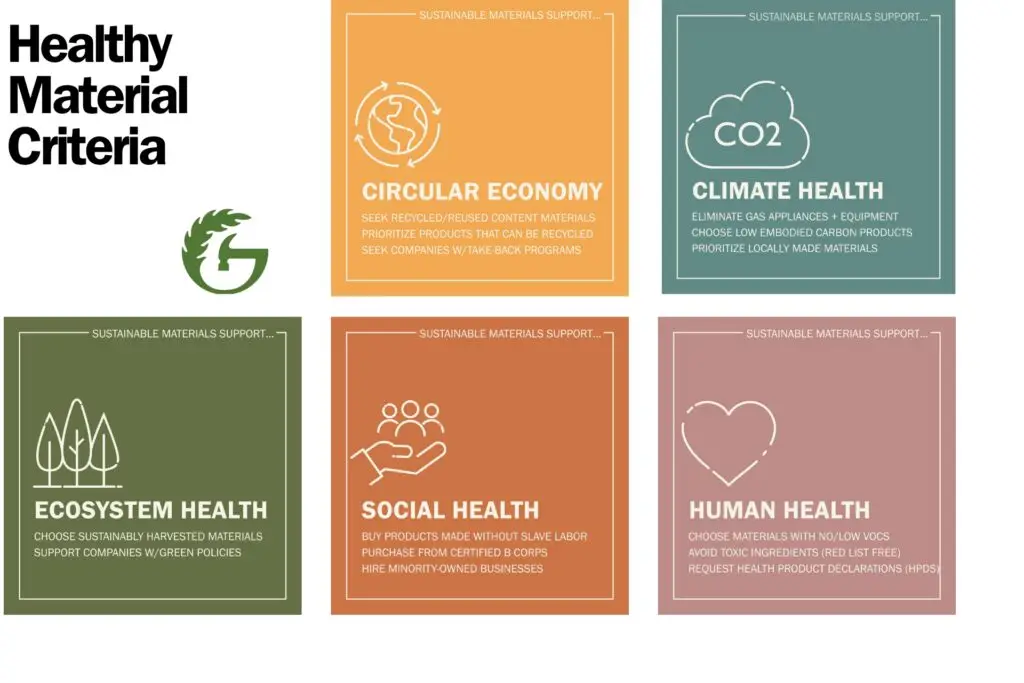
Finding a product that meets all five criteria can take considerable effort, so we work with our clients to clarify priorities while maintaining baseline standards for key materials. For example, we specify no-VOC paints (supporting human health), typically use FSC-certified wood framing (supporting ecosystem health, social health and climate health), and now specify low-embodied-carbon concrete (supporting climate health).
We also request and review Health Product Declarations (HPDs) to identify potentially harmful Red List ingredients and Environmental Product Declarations (EPDs) to better understand a product’s carbon footprint. These third-party resources help us look beyond marketing claims and make more informed choices about the materials we bring into our projects.
Fortunately, a growing number of resources make it easier to research and compare healthier building materials. The Parsons School of Design has compiled 26 product and certification databases, illustrating both the wealth of information available and the complexity of navigating it. We rely on many of these resources, along with our own internal materials database.
When we need product samples, we often turn to Source, a Portland-based resource with an extensive digital and physical materials library. Its database allows us to filter products based on the certifications and criteria that matter to us and quickly procure samples, helping us ensure the materials we specify are as beautiful and durable as they are healthy and sustainable.
Bottom line
There’s no single perfect building material, but every choice is an opportunity to build better. By asking the right questions and looking beyond marketing claims, we can select materials that are healthier for the people who live and work in our buildings, and better for the communities and ecosystems that surround them.
Additional resources
AIA’s Material Pledge Starter Guide
Living Building Challenge (LBC) Red List
Green Builder: Material Transparency
Mindful Materials Common Materials Framework