
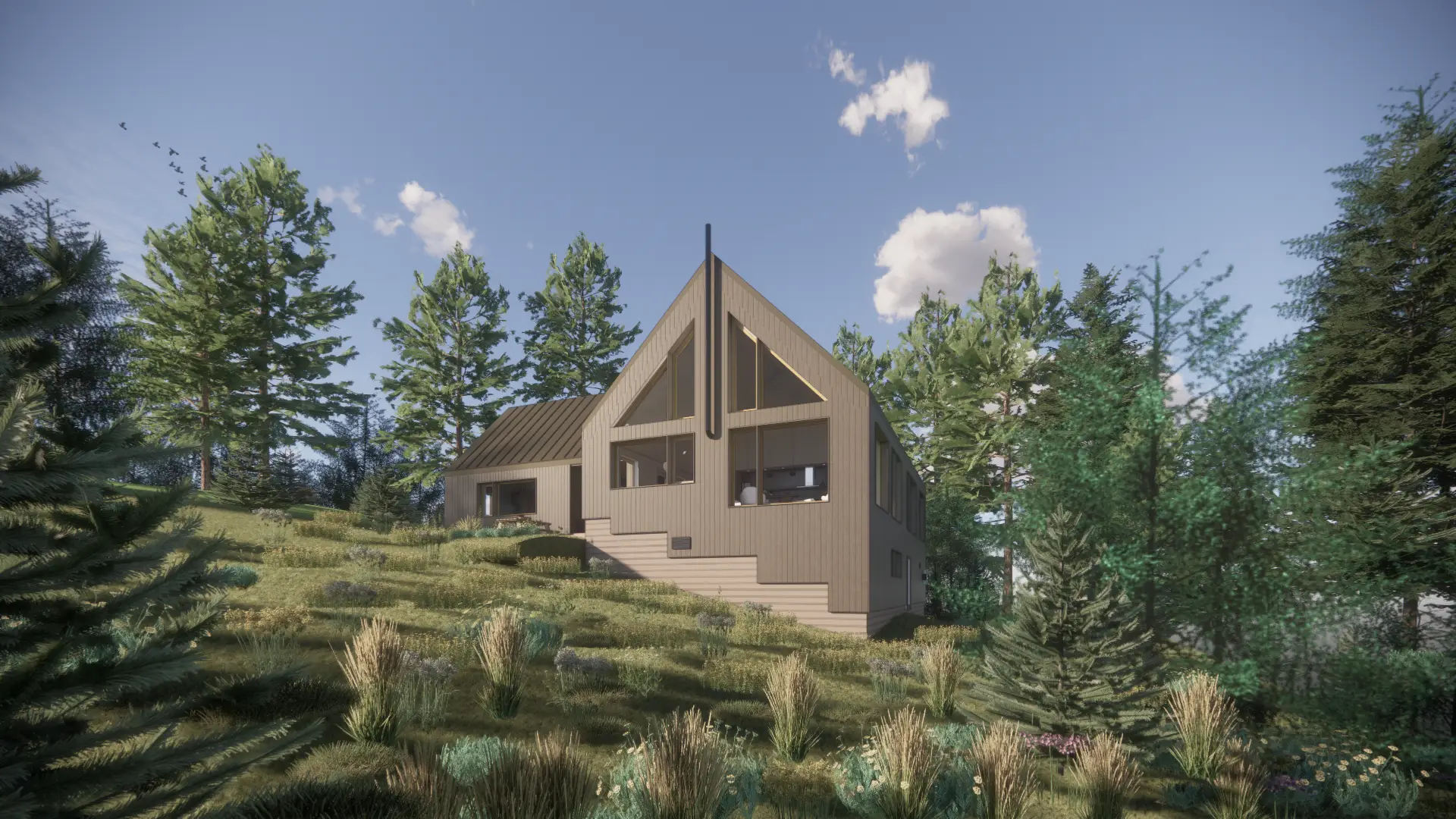
The way we source wood plays a crucial role in reducing a building’s carbon footprint while supporting local jobs and economic development. At Green Hammer, we’ve always prioritized sourcing “good wood” for our projects, ensuring the materials we use reflect our commitment to sustainability.
Over the years, our approach to sourcing good wood has evolved, thanks in large part to partners like Sustainable Northwest Wood. The expertise and regional connections of this Portland-based nonprofit make it easier for us to identify and source quality wood while building meaningful relationships with local loggers and millers.
At the Little Wing Residence, a custom home nestled in Oregon’s Wallowa Mountains, good wood takes center stage—both inside and out. This dream home is built on a five-acre parcel that has been thoughtfully stewarded by the homeowners’ family for generations. The house seamlessly blends in with the surrounding natural environment while helping to protect it.
When choosing materials, we focused on sourcing local wood that not only met our clients’ sustainability goals but also supported local livelihoods and traditional craftsmanship.
Building smarter with trusted partners
In this remote part of Oregon, partnering with trusted building professionals has been essential to our success. We were excited to collaborate with Collective Carpentry, which manufactures structural wall, roof, and floor panels in their climate-controlled facility in Invermere, British Columbia. These super-insulated panels are made primarily from FSC-certified lumber, with sourcing support from Sustainable Northwest Wood.
Compared to framing and insulating walls on site, this type of panelized wall construction significantly reduces wood waste and carbon emissions associated with transportation. Any leftover material at the factory is burned to heat the manufacturing warehouse, which produces significantly fewer carbon emissions compared to traditional landfill disposal, which releases methane emissions. Panelized construction also accelerates on-site installation, improves construction quality and boosts energy performance—often reaching the Passive House standard.
For our clients, this translates into a home with healthier indoor air, superior energy efficiency and a quiet, comfortable living environment.
Sustainable siding with a story
 Wood siding is, by far, the lowest-carbon option compared to materials like fiber cement, stucco, concrete, or metal. Naturally durable and rot-resistant, wood blends seamlessly into its surroundings, fostering a strong connection to the natural environment. And when it’s treated with a natural, borate-based Class A fire-retardant, it can be a great option for fire-prone regions such as this site.
At the Little Wing Residence, we wanted exterior siding that blended into the natural surroundings while being fire resilient and environmentally sustainable. We partnered with two regional suppliers whose work embodies stewardship —from managing forests rebounding after fire to reclaiming ancestral tribal lands, and restoring ecosystems through invasive-species removal.
Specifically, we sourced two types of wood siding for the home: juniper harvested as part of a grassland restoration effort, and incense cedar salvaged from the Milepost 97 fire near Canyonville, Oregon.
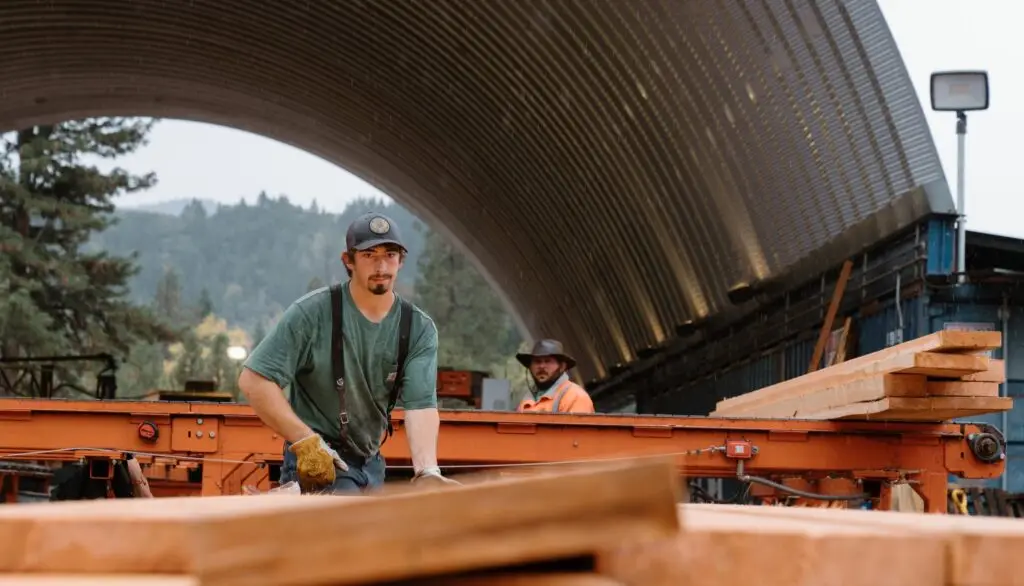
The Cow Creek Band of the Umpqua Tribe supplied 1×6 shiplapped incense cedar, processed locally at their sawmill in Canyonville. By sourcing fire-salvaged wood from the tribe, we’re contributing to ecological restoration, cultural renewal and the growth of their local economy—supporting their ongoing efforts to reclaim and restore ancestral lands.
For the home’s decking and additional cladding, we sourced restoration juniper from John Day, Oregon. Juniper, an invasive species, depletes water resources, causes erosion and threatens biodiversity. Using juniper harvested as part of grassland restoration efforts not only provides a durable building material but also supports regional restoration and improves ecosystem health.
Through these thoughtful material choices, the siding at Little Wing Residence tells a story of renewal, resilience and restoration—one that reflects both the natural environment and the homeowners’ values.
Goodbye drywall, hello hyper-local hygge
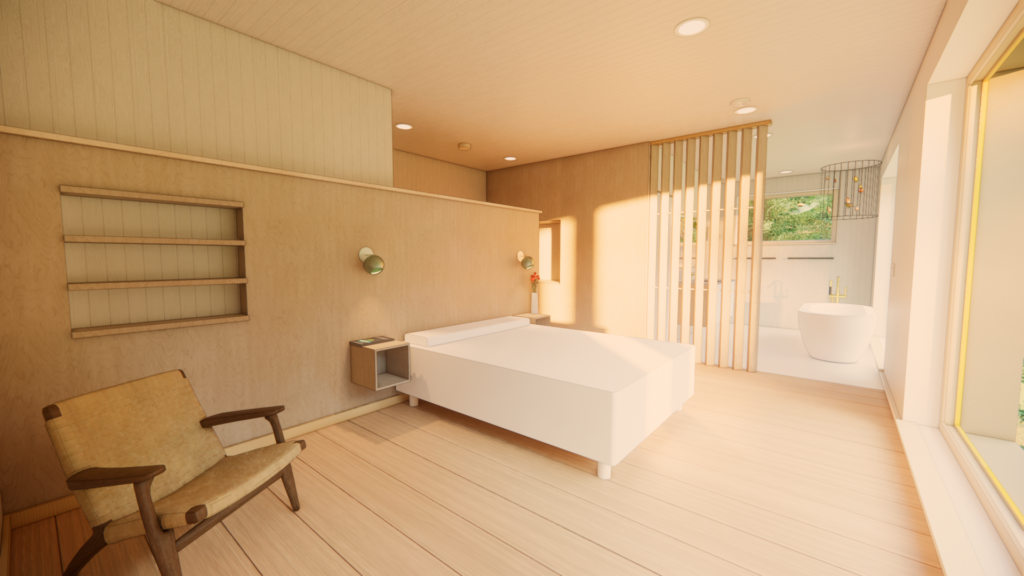 To further reduce the Little Wing Residence’s embodied carbon footprint, we eliminated drywall entirely, as the process of producing drywall is highly-energy intensive. Instead, we clad the interior of the home with locally harvested white fir tongue-and-groove boards, whitewashed to create a beautiful, biophilic interior that creates a calm, hygge feel throughout the home.
All of this white fir tongue and groove cladding was milled just 20 miles away by Jay Zee Lumber, a small, sustainably managed logging operation run by third-generation logger Jim Zacharias. Jim is deeply committed to land stewardship and educating his community on the benefits of wildlife habitat restoration through his work on the Wallowa Resources board of directors. Partnering with Sustainable Northwest Wood, we’ve had the privilege of learning from Jim’s invaluable expertise.
By thoughtfully sourcing “good wood” at every stage of the project, the Little Wing Residence stands as a testament to how sustainable materials, local partnerships and mindful design can come together to create a home that honors the land, the people, and future generations.